

Basic Knowledge Of Polymer Lithium-Ion Batteries
Battery introduction
▶Battery definition:
Device that converts chemical energy into electrical energy.
▶Basic reaction principle:
- Charging: oxidation reaction occurs at the positive electrode, reduction reaction occurs at the negative electrode.
- Discharging: reduction reaction occurs at the positive electrode and oxidation reaction occurs at the negative electrode.
Basic reaction principle of lithium-ion battery
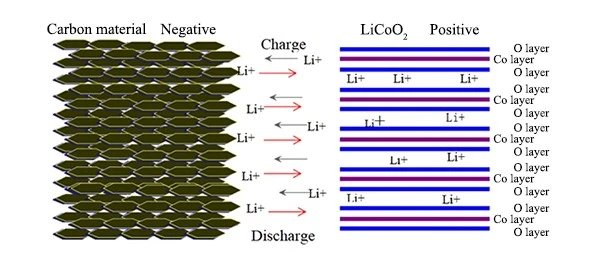
Cathode Reaction (LiCoO₂ ↔ CoO₂)

Anode Reaction (Graphite, C₆)

Overall Reaction
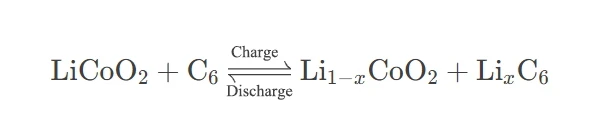
▶Charging:
Lithium ions are released from the positive electrode, pass through the electrolyte and the diaphragm and embed into the negative electrode.
▶Discharging:
Lithium ions are released from the negative electrode, pass through the electrolyte and the diaphragm and embed into the positive electrode.
During the entire charging and discharging process, there is no gain or loss of electrons (i.e., changes in chemical valence states). Charging and discharging are completed by the release and embedding of lithium ions between the positive and negative electrodes, which is different from general chemical power sources.
Advantages of lithium-ion battery
- High voltage
- High energy density
- High platform
- High cycle life
- Environmentally friendly, no pollution to the environment
Applications of polymer lithium-ion battery
- Mobile phones
- Laptops
- Electric toys
- Bluetooth devices
- MP3/MP4, etc.
Structure of polymer lithium-ion battery

Classification of polymer lithium-ion battery
▶Liquid soft package battery
The internal structure of the battery is the same as that of the aluminum shell, and the battery is a liquid-rich structure.
▶Colloidal polymer battery
Using gel electrolyte, there is almost no excess electrolyte inside the battery.
Basic composition of polymer lithium-ion battery
- Electrode sheet
- Battery tab
- Separator
- Protective tape
- Electrolyte
- Polymer packaging film
Structure of polymer lithium-ion battery - Electrode sheet
▶Composition:
Positive electrode: lithium cobalt oxide, conductive agent, binder, aluminum foil.
Negative electrode: graphite, conductive agent, binder, copper foil.
▶Function:
The matrix where lithium ions are extracted and embedded, and the battery relies on the extraction and embedding of lithium ions between the positive and negative electrodes to obtain voltage and provide electrical energy to the outside.
Structure of polymer lithium-ion battery - battery tab
▶Composition:
Positive tab: metal aluminum strip
Negative tab: metal nickel strip
▶Function:
The conductive path between the electrode and the battery shell, the voltage difference between the positive and negative electrodes is transmitted to the user through the electrode ear.
Structure of polymer lithium-ion battery - Separator
▶Composition:
Single layer of polyethylene, polypropylene film or multi-layer composite of the two
▶Function:
The insulator of the positive and negative electrodes also provides an ion conduction channel for lithium ions, adsorbs electrolyte, and ensures high ion conductivity.
Structure of polymer lithium-ion battery - protective tape
▶Composition:
Tape composed of polyethylene film and electrolyte corrosion-resistant glue
▶Function:
Tab high temperature protection tape: prevents the burrs at the tab riveting points from piercing the diaphragm and preventing short circuits caused by tab overheating;
Reel core termination tape: fixes the reel core
Structure of polymer lithium-ion battery - polymer packaging film
▶Composition:
It is divided into three layers, the innermost layer is polyethylene, the middle is aluminum foil, and the outer side is nylon
▶Function:
It acts as a container and also plays a role in shaping the appearance of the battery
Structure of polymer lithium-ion battery - structural design

- The battery positive and negative electrode surface capacity density is designed to be above 1.01 to avoid the precipitation of metallic lithium on the negative electrode surface during charging.
- The negative electrode of the battery is more than 0.5mm wider than the positive electrode, and the separator is more than 2.0mm wider than the negative electrode, to avoid misalignment caused by the winding spiral and short circuit of the positive and negative electrodes caused by heat shrinkage of the finished battery separator.
Basic production process of polymer lithium-ion battery

Acey Intelligent is a high-tech enterprise specializing in the R&D and manufacturing of high-end lithium-ion battery equipment. Our business covers:
- Battery Materials
- Battery Lab Research Machine
- Battery Lab-Scale Fabrication Line
- Battery Cell Tester
- Battery Pack Tester
- Cylindrical Battery Pack Assembly Equipment
- Prismatic Battery Pack Assembly Equipment
- Battery Pack Assembly Line
- Battery Environmental Safety Testing Equipment
- etc
If you have any questions regarding lithium battery materials and equipment, please feel free to contact us. We are always ready to provide you with professional technical guidance and one-stop solutions.