

Lithium batteries have varying degrees of environmental impact during production, use, and recycling. As times progress, we pay more attention to environmental protection issues. To minimize the damage caused by lithium batteries to the environment, we offer the following thoughts. Reducing the environmental impact of lithium batteries requires a multi-faceted approach throughout their entire life cycle, combined with technological innovation and policy management.
Here are specific measures:
1. Optimization in the production phase: Material innovations aim to reduce reliance on scarce metals (cobalt, nickel), lower extraction pollution, and develop systems like lithium iron phosphate (LFP) and nickel manganese oxide (LNMO) to decrease the use of cobalt-heavy cathode materials. For silicon-based or lithium metal anodes, it is necessary to enhance energy density and reduce the material consumption of graphite anodes. It may be considered to replace liquid organic electrolytes with solid-state electrolytes to eliminate leakage risks and the generation of toxic HF, thus reducing environmental pollution. Clean production: Solvent recovery technology: Implement a closed-loop NMP (N-methyl-2-pyrrolidone) recovery system in the preparation of electrode slurries to reduce volatile organic compound emissions. Eliminate solvent use; adopt dry electrode processes which form materials through powder pressing, thereby reducing energy consumption and pollution.

2. Efficiency enhancement during the usage stage: Extend cycle life: Optimize the battery management system (BMS) algorithms for precise charge/discharge control (e.g., avoid long-term storage at 100% state of charge). Cascading usage: Retired power batteries (with 80% remaining capacity) should be prioritized for use in energy storage stations, low-speed electric vehicles, etc.
ACEY-BP32-200A300A battery management system test equipment is designed to test and validate the performance of Battery Management Systems (BMS). This device automatically tests the various functions of BMS by simulating real battery operating conditions, ensuring its reliability, safety, and stability.
3. Recycling and resource regeneration: Improve recycling technology. Use hydrometallurgy: Leach metals using an H₂SO₄ + H₂O₂ system, achieving cobalt/nickel recovery rates of over 95%, and lithium recovery rates up to 80%. Direct recovery method: Restore cathode materials (such as LiCoO₂) through lithium supplementation and thermal treatment, retaining the crystal structure and reducing reprocessing energy consumption.
4. Technological innovation: Direct lithium extraction (DLE) technology can significantly reduce water usage. This method uses membranes or adsorbents to selectively extract lithium from brines, potentially returning most of the water back to aquifers and reducing land disturbance. Bio-based materials: Develop cellulose separators and natural polymer binders (e.g., algal extracts). Electromagnetic crushing and high recovery rate technologies: Integrated equipment for resource utilization of lithium batteries can achieve electromagnetic crushing of ternary lithium and lithium iron phosphate batteries, breaking the traditional limitation where batteries must be discharged before recycling, significantly improving recovery efficiency. The battery powder recovery rate and purity of this equipment reach 98%, achieving leading international standards.
5. Policy support: Subsidy incentives: Official tax reductions for batteries with more than 30% recycled materials; India's government initiatives such as green credit programs, recycling point trading systems, and recycling incentive frameworks linked to carbon credits are attracting numerous startups and social capital into the battery recycling supply chain. These innovative technologies not only enhance the efficiency and resource utilization of lithium battery recycling but also lessen the environmental impact.
The above are just some measures that can reduce the environmental load of lithium batteries in terms of resource consumption, pollution emissions, and waste disposal. However, it requires coordinated efforts from both upstream and downstream in the industry chain, relying on continuous technological breakthroughs to reduce the negative impact of lithium batteries on the environment.
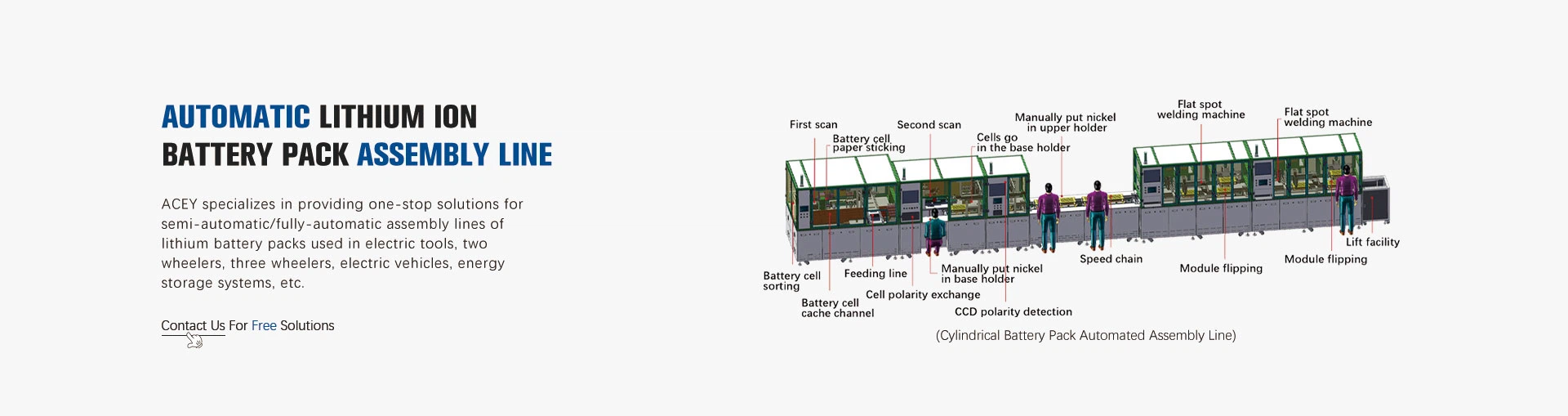
Acey Intelligent Equipment specializes in providing one-stop solutions for semi-automatic/fully-automatic assembly lines of lithium battery packs used in ESS, UAV, E-Bike, E-Scooter, Power Tools, Two/Three Wheelers, Etc. In Addition, we provide a complete set of battery pack assembly equipment, such as Cell Grading Machine, Battery Sorting Machine, Insulation Paper Sticking Machine, CCD tester, Manual/Automatic Spot Welding Machine, BMS Tester, Battery Comprehensive Tester and Battery Pack Test System, etc.