

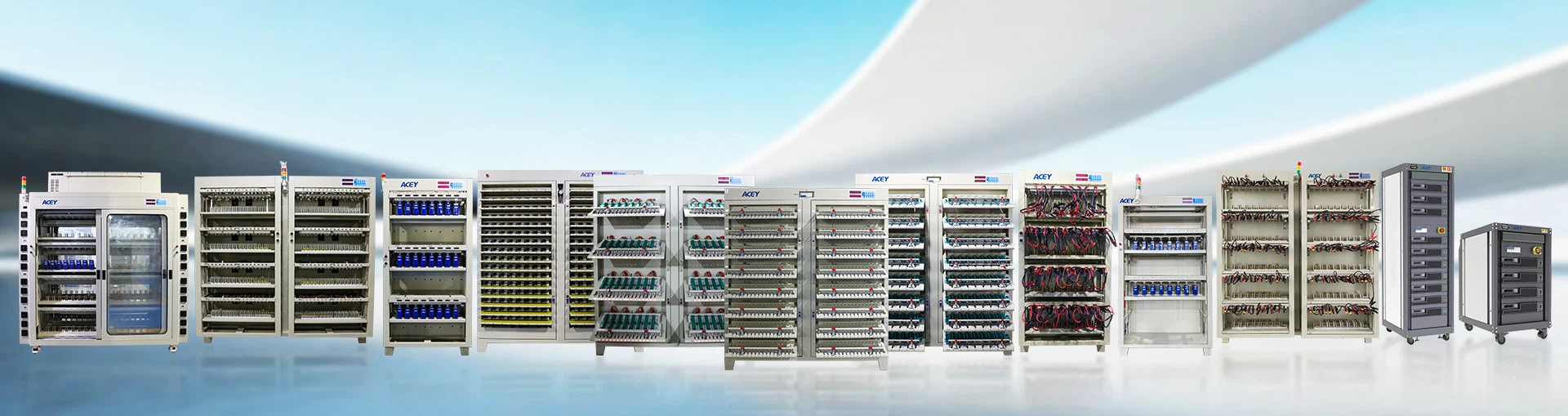
Integrated Tester
The Integrated Tester manufacture!
Our Lithium Battery Lab Fabrication Line is a modular, lab-scale production system designed for R&D, prototyping, and small-batch manufacturing of lithium-ion batteries. It replicates full-scale industrial processes, enabling seamless technology validation and scale-up.


After-sales service:
We have a professional after-sales engineer team to provide 24/7 all-weather service, and the product supports one-year warranty and lifetime maintenance. We provide complete after-sales services, including technical support, warranty repairs, spare parts supply, customer training, etc., to ensure that the equipment operates efficiently and meets your long-term needs.
Product market:
We have produced products that are well received by the market and are sold to more than 40 countries around the world.
Vision:
Our factory has advanced manufacturing equipment and our R&D team has more than 20 engineers to support customers' various customized needs.
OEM and ODM services:
Our products are rigorously tested and evaluated during the design and manufacturing process to ensure safety, reliability and environmental sustainability, and strictly comply with European regulatory requirements.
Advantages of Battery Testing System


Precision and Accuracy: High-precision testing systems can provide accurate measurements of battery performance parameters, ensuring reliable test results.
Comprehensive Testing Capabilities: They can perform a wide range of tests, from basic capacity and cycle life testing to more complex tests like rate capability, safety, and environmental testing.
Data Analysis: Advanced systems come with software that can analyze test data, helping to identify trends, predict battery performance, and improve battery designs.
Remote Monitoring and Control: Some systems allow for remote operation, enabling technicians to monitor and control tests from a distance, which can be especially useful in hazardous testing environments.
Efficiency and Time Saving: Automated testing systems can significantly reduce the time and effort required for battery testing, allowing for faster turnaround times in research and production.
Customization: Many battery testing systems can be customized to meet specific testing requirements, accommodating a variety of battery types and chemistries.
Scalability: Systems can be scaled to handle different sizes and numbers of batteries, from single cell tests to large battery packs used in electric vehicles.
Safety: They ensure that batteries meet safety standards and can safely handle various stress conditions without failure, which is critical for consumer protection.
Quality Assurance: Consistent and thorough testing helps maintain high-quality standards in battery manufacturing, reducing the risk of faulty products reaching the market.
Research and Development: For researchers, battery testing systems are invaluable tools for developing new battery technologies and improving existing ones.
Environmental Simulation: Some systems can simulate various environmental conditions to test how batteries perform under different temperatures, humidity levels, and other factors.
Regulatory Compliance: They help manufacturers ensure that their batteries comply with industry standards and regulations, which is essential for market acceptance.
Long-term Cost Savings: While the initial investment in a battery testing system may be significant, the long-term savings from improved quality, reduced waste, and faster development can be substantial.
Central Data Management: Systems that offer central data management solutions make it easier to organize, store, and analyze large volumes of test data, leading to more efficient data utilization.
Innovation: By providing detailed insights into battery performance, testing systems can drive innovation in battery technology, leading to the development of better-performing and more efficient batteries.
Calibrate a Multifunction Tester
Check the Manufacturer's Guidelines: Start by reviewing the manufacturer's guidelines and recommendations for calibration. The user manual should provide detailed instructions on the calibration process specific to your multifunction tester model.
Select a Calibration Standard: Calibration standards are reference devices with known, traceable values. Choose the appropriate calibration standard based on the type of test your multifunction tester will undergo. For example, if calibrating the insulation resistance function, you'll need a standard with a known and stable insulation resistance value.
Prepare the Test Environment: Calibration should be performed in a controlled environment to minimise external influences. Ensure that the temperature, humidity, and other environmental conditions are within the specified range for calibration.
Connect the Multifunction Tester: Follow the manufacturer's instructions to connect your multifunction tester to the calibration standard. This typically involves attaching the test leads or probes to the standard device.
Initiate Calibration Mode: Most modern multifunction testers have a dedicated calibration mode or procedure. Follow the specific steps outlined in the user manual to enter calibration mode.
Compare Readings: Once in calibration mode, the multifunction tester will generate readings based on the calibration standard's known values. Compare the readings displayed on the tester to the expected values provided by the calibration standard.
Adjust if Necessary: If the readings deviate from the expected values, your multifunction tester may have an adjustment mechanism. Follow the manufacturer's instructions to make precise adjustments to align the readings with the calibration standard.
Record Calibration Data: Document the calibration process, including the before and after readings, any adjustments made, and the date of calibration. This documentation is essential for maintaining a calibration history for your multifunction tester.
Verify Calibration: After calibration, perform a verification step to ensure the accuracy of the adjusted readings. This may involve rechecking the readings against the calibration standard.
Calibration Certificate: Once calibration is successfully completed, the multifunction tester should ideally generate

Please send us your purchase order by email or call us sales, or we can make the proforma invoice under your request.We need to know the following information for your order before sending your Pl. Payment methods T/T, L/C, D/P and so on.
1)Product information-quantity, specification(size, material, technological if needed and packing requirements etc.)
2)Shipping information-company name, street address, phone number,destination sea port.
Package
Standard exported package: Internal anticollision protection, external export wooden box packaging.
Shipping by express, by air, by sea according to customers' requirements to find the most suitable way.
Responsible for the damage during the shipping process, will change the damaged part for you for free.

FAQ
Find professional integrated tester manufacturers and suppliers in China here! Please feel free to buy high quality integrated tester from our factory. For customized service, contact us now.
Battery Comprehensive Tester, integrated tester