

Energy storage systems are moving toward higher capacity, higher energy density, longer cycle life, and lower system costs. One of the most visible trends in the lithium battery industry is the rapid increase in the capacity of energy storage battery cells.
For years, 280Ah and 314Ah prismatic cells were widely used in large-scale energy storage applications. The industry has since moved toward larger formats, with 500Ah, 600Ah, 700Ah and even higher-capacity cells attracting increasing attention.
But does a larger battery cell always mean a better energy storage system?
Not necessarily.

Increasing cell capacity can reduce the number of cells and connections required in an ESS battery pack, but larger cells also create new challenges in thermal management, manufacturing, testing, safety, and pack integration.
For battery manufacturers, the real question is not simply "How large should the cell capacity be?" but rather "How can a high-capacity cell be efficiently and reliably integrated into an energy storage battery pack?"
What Is a Large-Capacity Energy Storage Cell?
Battery cell capacity is commonly expressed in ampere-hours (Ah). It indicates how much electrical charge a cell can theoretically deliver under specified conditions.
For example, a 300Ah cell can theoretically deliver 300A for one hour, although actual usable capacity depends on the battery chemistry, operating conditions, discharge rate, temperature, and other factors.
In the energy storage industry, prismatic lithium iron phosphate (LiFePO4) cells have become widely used because of their combination of safety, cycle life, and cost.
As energy storage projects become larger, battery manufacturers are increasingly adopting high-capacity prismatic cells to simplify battery module and pack design.
The development from approximately 280Ah-class cells toward 300Ah+, 500Ah+ and 600Ah+ formats reflects a broader industry objective: store more energy with fewer individual cells and reduce the complexity of the overall battery system.
Why Are Energy Storage Battery Cells Getting Larger?
There are several reasons behind the trend toward larger battery cells.
1. Fewer Cells Can Reduce System Complexity
Consider an energy storage system that requires a large amount of stored energy.
If smaller-capacity cells are used, the system needs a larger number of individual cells to achieve the same total energy capacity. A larger number of cells also means more electrical connections, busbars, monitoring points, mechanical components, and potential failure points.
Using higher-capacity cells can reduce the total cell count.
This can simplify:
- Battery module design
- Busbar and connection structures
- Cell management
- Wiring
- Mechanical assembly
- Maintenance
- Production processes
For large-scale ESS projects, reducing the number of individual components can have a significant impact on manufacturing and system integration costs.
2. Higher Capacity Can Improve Pack-Level Energy Density
Larger-format cells can also contribute to higher energy density at the system level.
However, it is important to understand that cell capacity and energy density are not the same thing.
A battery cell with a higher Ah rating does not automatically have higher Wh/kg or Wh/L.
Energy depends on both voltage and capacity:
Energy (Wh) = Voltage (V) × Capacity (Ah)
Therefore, when evaluating a large-capacity energy storage cell, manufacturers should consider:
- Cell capacity
- Cell voltage
- Gravimetric energy density
- Volumetric energy density
- Cell dimensions
- Weight
- Cycle life
- Charge/discharge rate
The best cell is not necessarily the one with the highest Ah rating. It is the one that provides the best overall performance for the intended ESS application.
3. Lower Manufacturing and Integration Costs
A reduction in cell count can also simplify the battery pack manufacturing process.
For example, fewer cells may mean fewer:
- Welding points
- Electrical connections
- Insulation components
- Cell holders
- Wires
- Monitoring channels
This can help manufacturers reduce assembly time and improve production efficiency.
However, the benefit is only achieved when the production equipment is designed for the specific cell format and pack architecture.
This is why battery cell testing, sorting, stacking, welding, BMS testing, and end-of-line testing become increasingly important as energy storage battery cells become larger.
What Are the Challenges of Large-Capacity Battery Cells?
Large-format energy storage cells offer clear advantages, but they also introduce new engineering challenges.
1. Thermal Management Becomes More Important
Heat management is one of the most important considerations for large-capacity lithium battery cells.
During charging and discharging, a battery cell generates heat. As the physical size and capacity of a cell increase, managing temperature uniformity throughout the cell and module becomes more challenging.
Temperature differences between the core and surface can affect:
- Battery performance
- Charging efficiency
- Cycle life
- Cell consistency
- Safety
For this reason, large ESS battery systems increasingly require carefully designed thermal management systems and reliable temperature monitoring.

The battery cell itself is only one part of the safety equation. Cell design, module structure, cooling architecture, BMS strategy, electrical protection, and manufacturing quality must work together.
2. Larger Cells Require More Accurate Manufacturing
As battery cells become larger, manufacturing consistency becomes increasingly important.
Small differences in cell capacity, voltage, internal resistance, or state of charge can create imbalance when multiple cells are connected together.
For ESS battery pack manufacturing, cells should therefore be tested and grouped according to their electrical characteristics before assembly.
Typical cell grading and sorting parameters include:
- Capacity
- Open-circuit voltage (OCV)
- Internal resistance (IR)
- Charge/discharge performance
- Other application-specific parameters
A reliable battery cell testing machine and battery sorting machine helps manufacturers group cells with similar characteristics into the same battery module.
3. Cell Matching Becomes Critical
Battery pack performance depends heavily on cell consistency.
If cells with significantly different capacities or internal resistance values are assembled into the same module, the cells may behave differently during charging and discharging.
This can lead to:
- Uneven voltage distribution
- Different temperature rise
- Reduced usable capacity
- Faster degradation
- Increased balancing requirements
For this reason, battery cell grading is an important step before module assembly.
For prismatic ESS batteries, automated or semi-automated cell testing and sorting equipment can help manufacturers collect test data and classify cells before stacking.
Conclusion: Bigger Is Not Always Better
The trend toward large-capacity energy storage cells is unlikely to disappear.
Higher-capacity cells can reduce the number of cells required in an energy storage battery system, simplify module architecture, reduce connection points, and potentially lower manufacturing and integration costs.
However, larger cells also introduce challenges in thermal management, cell consistency, testing, mechanical assembly, welding, and safety.
Therefore, the future of ESS battery technology is not simply a competition for the largest Ah rating.
FAQ
Are larger energy storage cells better?
Not necessarily. Larger cells can reduce cell count and system complexity, but they may also create greater challenges in thermal management, manufacturing, and safety. The best cell depends on the specific ESS application.
Why are 300Ah, 500Ah and larger cells becoming popular for energy storage?
Higher-capacity cells can store more energy per cell, reducing the number of cells and electrical connections required in a battery system. This can simplify battery module design and potentially reduce system costs.
What tests are important for large-capacity energy storage cells?
Capacity, voltage, internal resistance, charge/discharge performance, and consistency are important parameters. Additional testing requirements depend on the battery chemistry and application.
What equipment is needed to assemble an ESS battery pack?
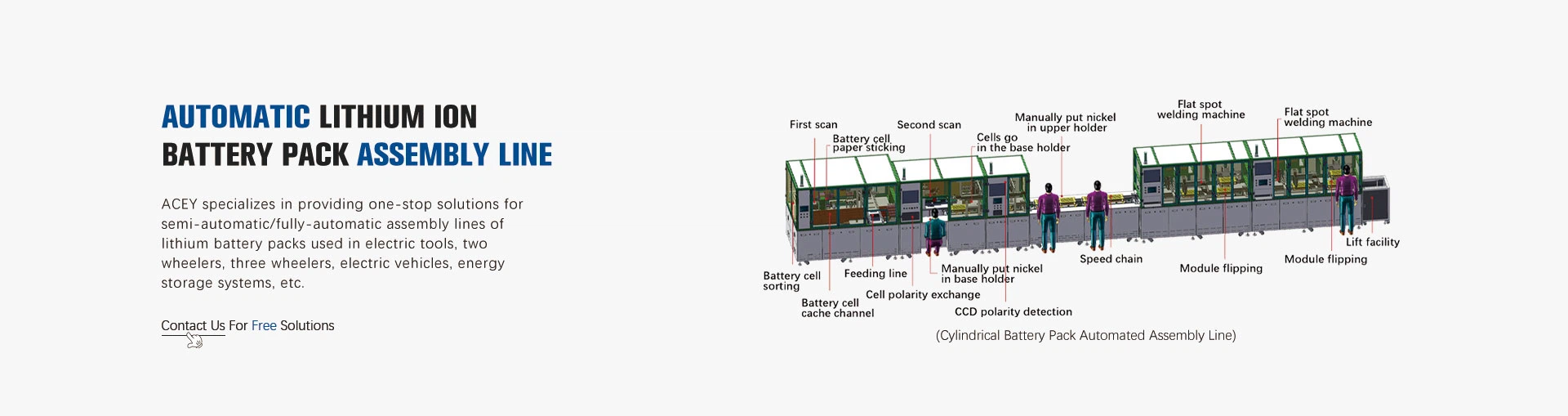
A typical ESS battery pack production line may include battery cell testing and sorting equipment, stacking and pressing machines, laser cleaning equipment, laser welding machines, EOL testers, BMS testers, comprehensive battery pack testers, and aging equipment.
Can large-capacity prismatic cells be used in automated battery pack assembly lines?
Yes. Automated and semi-automatic assembly lines can be designed around different prismatic cell dimensions and pack configurations. The equipment and process should be customized according to the cell size, module structure, welding method, production capacity, and testing requirements.
