

1. The "V-Shaped Lifespan Curve" of Lithium Batteries
The relationship between battery aging rate and temperature is not a simple "straight line," but rather exhibits a V-shaped pattern: there is an "optimal temperature" at which the battery's cycle life is maximized; temperatures below or above this point accelerate aging. In the low-temperature range (<25°C), aging is primarily driven by "lithium deposition." At this temperature, lithium ions cannot smoothly integrate into the crystal lattice on the anode surface, and instead precipitate as metallic lithium, forming "lithium dendrites." These needle-like crystals not only consume active lithium but can also pierce the separator, causing a short circuit. In the high-temperature range (>25°C), aging is primarily driven by "excessive growth of the SEI film." The SEI film is a protective layer on the surface of the battery's anode. While it should be stable, high temperatures cause it to grow relentlessly, eventually blocking lithium ion channels and consuming significant amounts of electrolyte. It's important to note that this "optimal temperature" is not a fixed value. It will be affected by the battery type, charge and discharge rate, and design process: for example, the optimal temperature of a ternary lithium battery may be around 25°C, while a lithium iron phosphate battery may be more resistant to low temperatures and have a slightly lower optimal temperature; in the fast charging scenario, the heat generated inside the battery increases, and the optimal temperature point will also shift accordingly. This also explains why the range of electric vehicles is "halved" in winter, but faces a shortened lifespan in summer - lithium batteries are more sensitive to temperature than we imagine.

2. From laboratory to reality: high temperature's "all-round attack" on lithium batteries
Laboratory data may be abstract, but real-life cases are enough to illustrate the destructive power of high temperature on lithium batteries. Whether it is electric vehicles, mobile phones or energy storage power stations, the "aging" and "safety hazards" brought about by high temperatures are actually happening.
(1) Electric vehicles: the dual dilemma of reduced range and sharp decline in lifespan For electric vehicles, the battery pack is the "heart" and high temperature is the "heart disease inducer". The "summer discount" of range: When the ambient temperature exceeds 35°C, the side reactions inside the battery intensify, and the actual available capacity will drop by 10%-20%. For example, an electric car with a nominal range of 600 kilometers may only be able to travel 500 kilometers or less in high summer temperatures. "High-temperature limitations" on charging speed: To avoid safety risks associated with charging in high temperatures, the battery management system (BMS) proactively reduces charging power. A fast charge that typically charges the battery to 80% in 30 minutes may take over an hour in high temperatures, severely impacting the user experience. A "precipitous drop" in battery life: Electric vehicles used in high-temperature regions for extended periods can experience a battery lifespan that is 50% shorter than in temperate regions. For example, in tropical regions like Saudi Arabia, the average replacement cycle for electric vehicle batteries is approximately 3-4 years, while in Northern Europe, this cycle can be extended to 6-8 years. More importantly, high temperatures can exacerbate battery inconsistencies. A battery pack consists of hundreds of individual cells. High temperatures can accelerate the aging of some cells due to uneven heat dissipation, which in turn impacts the performance of the entire pack, creating a "barrel effect" where the weakest cell determines the lifespan of the entire pack.

(2) Consumer electronics: The capacity crisis behind mobile phone "heating" Have you ever had this experience: in the summer, you put your mobile phone in your pocket, and when you take it out, it is very hot and the battery is drained very quickly? This is actually the high temperature "eroding" the mobile phone battery. The optimal operating temperature of mobile phone lithium batteries is 20-25℃. When the temperature exceeds 40℃, the battery capacity will drop significantly. Experiments show that when a mobile phone is used to play games continuously for 1 hour at 35℃, the battery capacity loses about 0.5%; when the same operation is performed at 45℃, the capacity loss can reach 2%, and this loss is irreversible. Long-term high-temperature use will cause mobile phone batteries to "age prematurely". For example, a new mobile phone used at room temperature for 2 years may still have 80% of its battery capacity; however, a mobile phone used frequently in a high-temperature environment may only have 60% of its capacity after 2 years, requiring frequent charging or even sudden shutdown. This is why mobile phone manufacturers add "high temperature protection" to the system: when the battery temperature exceeds 45℃, the CPU frequency will be automatically reduced, background applications will be closed, and charging will even be suspended. This seemingly "troublesome" design is actually protecting the battery.
(3) Energy storage power station: "Safety and efficiency" game under high temperature As the proportion of renewable energy power generation increases, energy storage power stations have become the "ballast stone" of power grid stability, but the impact of high temperature on energy storage lithium batteries is also significant. The lithium battery pack of energy storage power stations has large capacity and high density, and the heat dissipation difficulty under high temperature is far greater than that of consumer electronics and electric vehicles. Once the temperature is out of control, it will not only cause capacity decay, but may also cause large-scale thermal runaway. In 2021, a battery fire caused by high temperature at an energy storage power station in California, USA, caused tens of millions of dollars in losses. This incident also made the energy storage industry re-examine the importance of high temperature protection. In order to cope with high temperatures, energy storage power stations have to invest a lot of money to build a "temperature control system": using liquid cooling, air cooling and other methods to control the battery temperature at 25-30℃. However, this will increase the energy consumption of the power station. According to estimates, the energy consumption of the temperature control system accounts for about 5%-10% of the total energy consumption of the energy storage power station, which directly affects the economic efficiency of the power station.
3. Breakthrough: Technological Revolution from "Passive Cooling" to "Active Heat Resistance"
Faced with the threat of high temperature, the lithium battery industry is shifting from "passive defense" to "active attack." From material innovation to system design, a series of technological breakthroughs are "covering lithium batteries with high-temperature armor."
(1) Material innovation: making batteries "naturally durable" Positive electrode material:
Single crystal high nickel positive electrode: compared with traditional polycrystalline NCM, the single crystal structure can reduce the dissolution of metal ions at high temperatures and improve stability. For example, after 500 cycles at 60℃, the capacity retention rate of single crystal NCM811 can reach 85%, while that of polycrystalline NCM811 is only 65%. Cobalt-free positive electrode: reducing the use of cobalt elements not only reduces costs but also improves high-temperature stability. CATL's "cobalt-free battery" boasts a 30% longer cycle life at 45°C than traditional ternary batteries.
Anode Material: Silicon-carbon composite anode: Silicon has a theoretical capacity over 10 times that of graphite, but suffers from significant volume expansion. Through nanostructure design and carbon coating technology, the high-temperature cycling stability of the silicon-carbon anode has been significantly improved, and it is currently being used in some high-end electric vehicles. Lithium titanate anode: Lithium dendrite deposition is virtually nonexistent, offering excellent high-temperature stability, but with a lower energy density, making it more suitable for applications such as energy storage where density requirements are low.
Electrolyte and separator: Solid-state electrolyte: Eliminates the high-temperature decomposition problem of liquid electrolytes and offers heat resistance exceeding 150°C. Toyota and other automakers have announced that solid-state batteries will be mass-produced in 2027, which will significantly improve the high-temperature safety of electric vehicles. High-temperature resistant separator: Separators made of high-temperature resistant materials such as aramid maintain structural stability above 180°C, effectively preventing the risk of short circuits at high temperatures.
(2) System design: "Equip the battery with air conditioning"
Even if the materials are more advanced, the heat dissipation system is still the "last line of defense" in high temperature environments. The current mainstream thermal management technologies include: Liquid cooling system: The coolant circulates inside the battery pack to remove heat. The heat dissipation efficiency of liquid cooling is 3-5 times that of air cooling, and it can control the battery temperature more accurately. Tesla Model 3, BYD Han and other high-end electric vehicles all use liquid cooling systems, which can control the battery temperature difference within ±2℃. Intelligent temperature control algorithm: Combine AI prediction and real-time monitoring to dynamically adjust the heat dissipation strategy. For example, when the BMS detects that the battery temperature exceeds 35℃, it will start liquid cooling in advance; when it predicts the need for fast charging, it will preheat the battery to the optimal temperature range first, which not only ensures the charging speed but also reduces high temperature damage. Structural optimization: Improve heat dissipation efficiency through battery pack layout design. For example, the battery is arranged in a "honeycomb shape" to increase the heat dissipation area; thermal pads are added between single cells to accelerate heat transfer.
(3) Recycling and cascade utilization: Extending the battery "life cycle"
Even if the battery capacity decays at high temperatures, it does not mean that it is completely scrapped. Through cascade utilization and recycling technology, its residual value can still be tapped: Cascade utilization: Power batteries with capacity decay below 80% can be used in energy storage, low-speed vehicles and other scenarios with low capacity requirements. For example, a Beijing energy storage power station uses retired electric vehicle batteries, and the cost per kilowatt-hour is 30% lower than that of new batteries. Material recycling: Through hydrometallurgy, pyrometallurgy and other technologies, nickel, cobalt, lithium and other metals are extracted from scrapped batteries and reused in new battery production. At present, the domestic battery recycling rate has reached more than 95%, which can effectively reduce resource waste.

4. Conclusion:
The impact of high temperature on lithium batteries is both a technical challenge and an industrial opportunity. From the scientific laws revealed by the Arrhenius equation to the full-chain innovation of materials, systems and recycling, humans are using wisdom to fight against the "erosion" of temperature on batteries. With the maturation of technologies like solid-state batteries and intelligent thermal management, future lithium-ion batteries may be able to operate stably in temperatures ranging from -40°C to 80°C, truly achieving "no degradation at high temperatures and no breakdown at low temperatures." By then, electric cars traversing the Sahara Desert, mobile phones in tropical climates, and energy storage power stations operating reliably in the scorching summer heat will no longer be a dream.
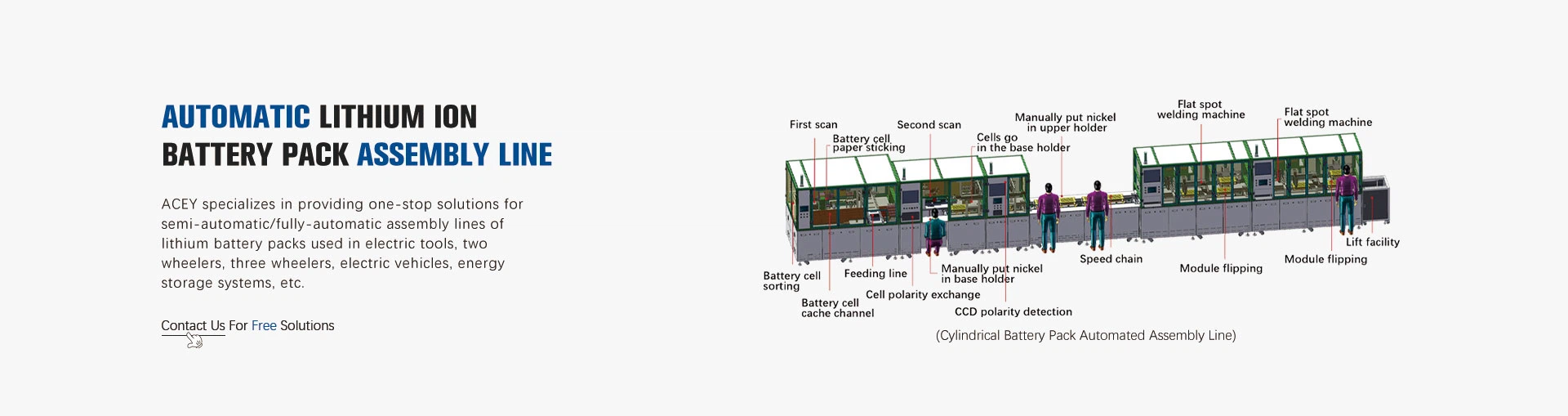
Acey Intelligent specializes in providing one-stop solutions for semi-automatic/fully-automatic assembly lines of lithium battery packs used in ESS, UAV, E-Bike, E-Scooter, Power Tools, Two/Three Wheelers, Etc. In Addition, we provide a complete set of battery pack assembly equipment, such as Cell Grading Machine, Battery Sorting Machine, Insulation Paper Sticking Machine, CCD tester, Manual/Automatic Spot Welding Machine, BMS Tester, Battery Comprehensive Tester and Battery Pack Test System, etc.