

1. What is cell bulging?
Simply put, cell bulging occurs when the outer shell of a battery cell expands outward due to increased internal pressure, much like a flat balloon being slowly inflated. Normally, a battery cell has a smooth, regular appearance. Once bulged, it becomes uneven and, in severe cases, deformed.
The signs of cell bulging vary across different electronic products. In mobile phone batteries, the most obvious sign is a slight bulge in the back cover or a gap between the screen and the frame. In severe cases, the screen may even warp. If your phone suddenly feels thicker and uneven, it's likely a bulging cell.

Bulging is also common in drone batteries. When a drone battery cell bulges, the overall shape of the battery changes, potentially becoming distorted from a previously square shape. Furthermore, placing a bulging battery into a drone's battery compartment can be difficult, or even impossible. Even if it manages to fit, it can affect the drone's flight stability.
Turning to cars, bulging cells in new energy vehicles are a serious problem. While bulging cells may not be immediately noticeable, they can significantly reduce range, slow charging speeds, and even trigger vehicle fault alarms during use. Severe bulging cells can also affect vehicle safety, such as causing overheating and increasing the risk of spontaneous combustion. Therefore, if you notice signs of bulging cells in your car, it's crucial to address them promptly and not take them lightly.
2. Common Causes of Cell Bulging
2.1 Charging Issues:
Overcharging: Overcharging is a major culprit for cell bulging. Normally, when a battery cell is charging, lithium ions migrate from the positive electrode to the negative electrode, and charging stops when a certain charge is reached. However, if overcharging occurs-when the charging voltage exceeds the cell's upper limit (for example, a typical lithium-ion battery cell's voltage exceeds 4.2V)-a complex series of chemical reactions occurs within the cell, causing the electrolyte to decompose and produce gases such as carbon dioxide (CO₂) and methane (CH₄). These gases accumulate inside the cell, like an inflating balloon, eventually bulging the cell casing. Just like pouring water into a full cup, if you continue pouring, the water will overflow. Similarly, overcharging can cause a cell to bulge. Using a non-original charger is particularly prone to overcharging. Some non-genuine chargers are of substandard quality and lack comprehensive overcharge protection. If charging takes too long or the voltage is unstable, it can easily overcharge the battery cells. Another possible cause is a malfunction in the charging device itself, such as a faulty voltage regulator circuit in the charger, which can result in excessively high output voltage, which can also lead to overcharging and bulging of the battery cells.
Overdischarge: Overdischarge is also very damaging to battery cells. When a battery cell discharges to a low voltage (for example, a lithium-ion battery cell with a single cell voltage below 3.0V), the copper current collector at the negative electrode begins to dissolve, and the structure of the positive electrode collapses. This disrupts the chemical balance within the cell, causing gas to be generated during the subsequent charge and discharge process. For example, many drone users ignore the battery indicator, forcing the drone to fly even after the low-voltage alarm, and then landing only when the battery is depleted. This can lead to overdischarge of the battery. Some people also fail to charge the drone battery promptly after flight, leaving it at a low charge for an extended period. This can also accelerate damage to the battery cells and make them prone to bulging. Once a battery cell bulges due to overdischarge, its capacity will drop significantly. A drone that once flew for half an hour might now only fly for a dozen minutes, severely impacting the user experience.

2.2 Environmental Factors
High Temperature: High temperatures are a hidden killer for battery cells. When temperatures exceed 45°C, the electrolyte within the battery cell decomposes faster, and the solid electrolyte interface (SEI) membrane within the battery cell ruptures, triggering a series of side reactions that produce gases. Imagine leaving your phone in your car in direct sunlight on a hot summer day. The temperature inside the car could soar to 50 or 60°C. If your phone is still charging at this time, the battery cell is prone to problems. High temperatures not only cause bulging while charging, but also damage the battery cell even when not charging. For example, if a power bank is left in direct sunlight, it will soon bulge. This is because the high temperature accelerates the chemical reactions within the cell, overloading it.
Physical Damage: Physical damage, such as impact or puncture, can also cause bulging. When a battery cell is struck by external force or punctured by a sharp object, the positive and negative electrode materials inside the cell may come into direct contact, causing an internal short circuit. Once a short circuit occurs, a large amount of heat is rapidly generated locally, causing the electrolyte to vaporize instantly. The expansion of the gas pushes up the cell casing, causing a bulge. This can occur if the battery is squeezed or bumped during transportation without proper protection. Some people are also careless when using electronic products, such as accidentally dropping their phone or poking the battery with a sharp object. While this may not be noticeable at the time, it can lead to gradual swelling. Therefore, it's important to protect your electronic devices and batteries from physical damage.
Storing at a full charge: Many people may not realize that storing a battery at a full charge can also be very harmful to the battery cell. If a battery cell is fully charged and stored for an extended period, the electrolyte inside the cell will continue to undergo a side reaction, producing gas. Data shows that the probability of bulging is five times higher after three months of storage at a full charge than when the battery is stored at 40%. This is because when fully charged, the chemical activity within the battery cell is high, making various side reactions more likely to occur. Just like leaving a balloon filled with air for a long time, the balloon may deform due to the internal pressure changes. The same is true for battery cells.
Storing batteries with empty batteries is also undesirable. When batteries are stored with empty batteries for a long time, the copper foil on the negative electrode will oxidize. When they are recharged, gassing will occur, causing bulging of the battery cell. Therefore, if batteries are to be stored for an extended period, they must be charged to the appropriate level (generally 40% to 60% is recommended) and then stored in a cool, dry place.

2.3 Battery Quality Issues
Manufacturing Defects: Process defects during the battery cell manufacturing process can easily lead to bulging. For example, uneven separator thickness can cause localized breakdown during charge and discharge, leading to a short circuit between the positive and negative electrodes and causing bulging. Furthermore, if the electrode coating has defects, lithium dendrites can easily grow and pierce the separator, causing an internal short circuit and bulging. Some low-priced batteries on the market have particularly high bulging rates due to manufacturers' lax production processes and insufficient quality control to reduce costs.
Material issues: The quality of battery materials is also crucial. If the electrolyte used is of low quality and contains high impurities, abnormal reactions can occur during the battery's charge and discharge process, generating gases and causing bulging. Furthermore, if the electrode materials are contaminated with impurities, battery performance can be affected, leading to unstable reactions within the cell and ultimately causing bulging. To save costs, some small-scale battery manufacturers may use inferior materials. Such batteries are not only prone to bulging but also pose significant safety risks, such as spontaneous combustion and explosion. Therefore, it is important to choose batteries made with high-quality materials to mitigate the risk of bulging at the source.
3. How to Prevent Battery Cell Bulging
3.1 Use the Original Charger
Using the original charger is key to preventing battery cell bulging. Original chargers are specifically designed for the device and battery cells. They precisely control the charging voltage and current, ensuring safe charging conditions. Non-original chargers, however, can vary in quality and may cause voltage instability, overcharging, and other problems. Therefore, whether it's a mobile phone, computer, or other electronic device, always use the original charger. If the original charger breaks, always purchase an officially approved replacement.
3.2 Control the Charging Temperature
As mentioned earlier, high temperatures are very harmful to battery cells, so controlling the charging temperature is crucial. Try to charge your phone between 5°C and 45°C, avoiding direct sunlight or cold temperatures. For example, in the summer, avoid charging your phone in direct sunlight; it's best to charge it in an air-conditioned room. In the winter, if you're outside, don't rush to charge your device; wait until the temperature returns to normal before charging. Avoid overcharging and discharging. Develop good charging habits and avoid overcharging and discharging. Generally speaking, it's ideal to cycle between 20% and 80% battery life.
3.3 Regular Inspection and Maintenance
Regularly inspecting the battery cell's condition is also crucial. Check monthly for signs of bulging, deformation, or leakage. If even minor bulging is detected, replace the battery promptly to prevent further damage. Some devices, such as iPhones, have built-in battery health monitoring features, allowing you to view the battery's maximum capacity and health status in the settings. For larger devices, such as new energy vehicles, it's best to visit a professional repair shop for regular battery inspection and maintenance to identify potential problems.
3.4 Choosing High-Quality Batteries
When purchasing batteries or devices containing batteries, avoid price gouging; always choose reliable quality. Batteries from reputable brands offer greater assurance in manufacturing processes, material selection, and quality control, and are much less likely to bulge. Check for relevant quality certifications, such as UL and IEC. These certification marks indicate that the battery meets certain safety and quality standards.
3.5 Scientific Battery Storage
If you plan to store batteries for an extended period, you must master scientific methods. Before storing, charge the battery to 40%-60% and store it in a cool, dry, well-ventilated area, away from direct sunlight and high temperatures. For example, unused power banks and camera batteries should not be left lying around. It's best to store them in a dedicated battery storage box. This protects the battery and makes it easier to find it the next time you need it. If you're going to use a battery after a period of storage, perform a full charge and discharge cycle to restore its performance.
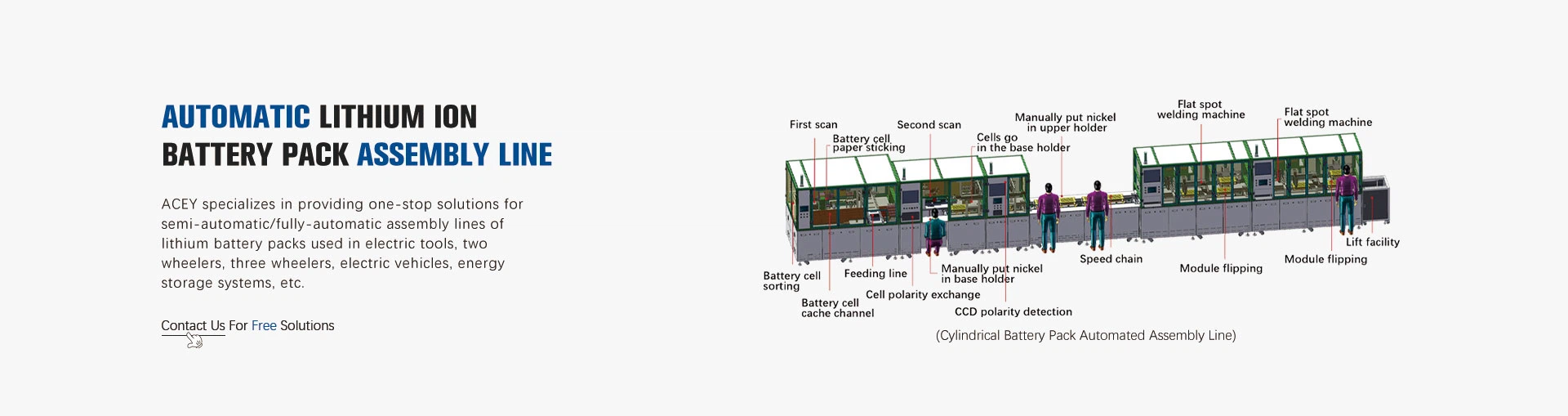
Acey Intelligent specializes in providing one-stop solutions for semi-automatic/fully-automatic assembly lines of lithium battery packs used in ESS, UAV, E-Bike, E-Scooter, Power Tools, Two/Three Wheelers, Etc. In Addition, we provide a complete set of battery pack assembly equipment, such as Cell Grading Machine, Battery Sorting Machine, Insulation Paper Sticking Machine, CCD tester, Manual/Automatic Spot Welding Machine, BMS Tester, Battery Comprehensive Tester and Battery Pack Test System, etc.