

LFP batteries exhibit significantly better heat resistance than ternary lithium batteries. This advantage is a core characteristic of their safety and a key consideration in many applications, such as energy storage batteries where ternary lithium batteries are not permitted.

The differences in their heat resistance are mainly reflected in the following aspects:
1. Thermal Stability: Lithium Iron Phosphate Has a Clear Advantage
The chemical structure (olivine structure) of lithium iron phosphate (LFP) is very stable, giving it excellent heat resistance. Ternary lithium (NCM/NCA), due to its more reactive chemical composition, is more prone to crystal structure changes at high temperatures.
2. Thermal Runaway Temperature: A Huge Difference
Thermal runaway is the most dangerous state of a battery, referring to the uncontrolled rise in internal temperature, ultimately leading to fire or explosion. The following is a comparison of the temperatures at critical points of thermal runaway for both batteries:
The data clearly shows that the "fire threshold" and "runaway upper limit" of lithium iron phosphate batteries are much higher than those of ternary lithium batteries:
| Item | Lithium Iron Phosphate Battery (LFP) | Ternary Lithium Battery (NMC/NCA) |
| Cathode Material Decomposition Temperature | Approx. 500–800°C | Approx. 200–300°C |
| Thermal Runaway Trigger Temperature | Above approx. 250–300°C | Can be triggered at approx. 120–200°C |
| Peak Thermal Runaway Temperature | Approx. 520–620°C | Up to 800–920°C |
| Self-Heating Onset Temperature | Higher (approx. 116.5°C) | Lower (approx. 65.8°C) |
3. Intensity of Combustion: Lithium Iron Phosphate (LFP) is Milder
Even in the unfortunate event of thermal runaway, the danger levels of the two are completely different:
3.1 Combustion Process: LFP does not easily decompose into oxygen molecules at high temperatures, resulting in relatively mild combustion; while ternary lithium materials decompose into oxygen at high temperatures, providing an accelerant for combustion, leading to a more intense fire, even forming jet-like flames.
3.2 Gas Release: LFP mainly releases smoke during thermal runaway, usually without an open flame. Ternary lithium batteries, however, violently eject large amounts of flammable liquids and solid debris, potentially igniting surrounding objects and causing greater damage.
3.3 Spread Speed: A test on high-nickel (NMC811) ternary lithium batteries showed that their thermal runaway propagation speed is 5 times that of lithium iron phosphate batteries. This means that once a ternary lithium battery goes out of control, the fire spreads to adjacent batteries extremely quickly, leaving a much shorter window for escape.
While ternary lithium batteries do not exhibit the same heat resistance as LFP batteries at the material level, significant technological advancements in recent years have bridged this gap through engineering and system-level design improvements. These measures include:
• Cell optimization: employing monocrystalline materials, high-safety separators, overcharge protection additives (such as PTC additives), and novel flame-retardant electrolytes.
• Module design: placing thermal insulation materials such as aerogel between cells and designing directional venting and pressure relief valves.
• System integration: designing reinforced battery pack casings and filling the spaces between cells and modules with fire-retardant materials such as thermally insulating potting compounds.
• Battery management system (BMS): preventing thermal runaway through more precise voltage, current, and temperature monitoring, and advanced algorithms.
BMS tester machine is used to test and verify the performance of battery management systems, simulate real battery operating conditions, and automate the testing of various functions of BMS to ensure its reliability, safety, and stability.

In summary
Lithium iron phosphate batteries have a significant advantage in high-temperature resistance, exhibiting a higher thermal runaway trigger temperature and milder combustion.
However, achieving higher energy density requires measures to improve the safety of ternary lithium batteries, further increasing the cost of ternary lithium battery cells. Therefore, electric vehicles equipped with ternary lithium batteries are more expensive than those with lithium iron phosphate batteries because the cost is higher.
about us
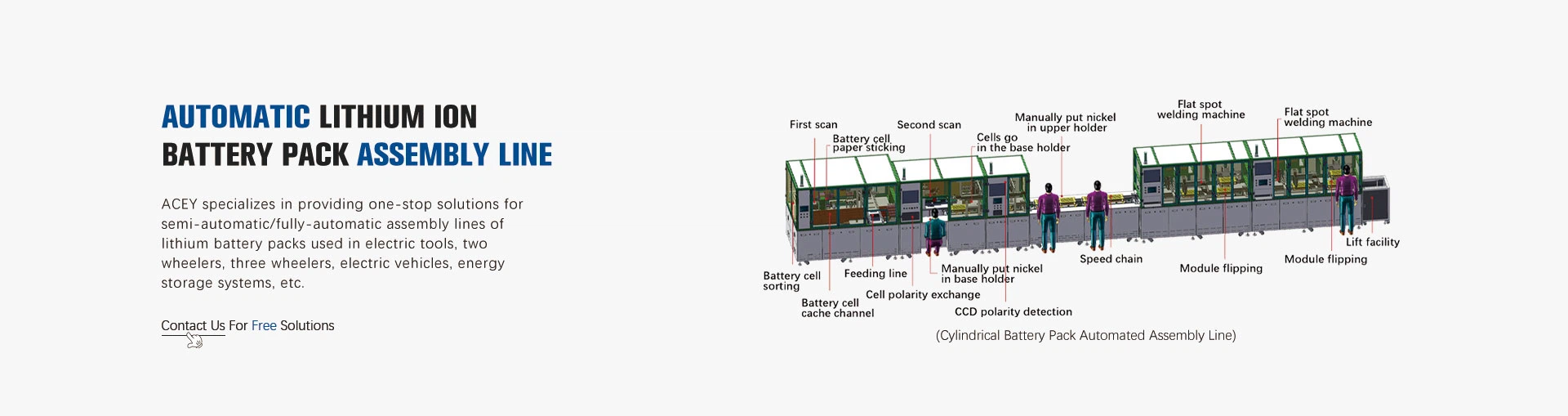
Acey Intelligent offers one-stop solutions for semi-automatic and fully-automatic lithium battery pack assembly lines serving applications such as energy storage systems (ESS), UAVs, e-bikes, e-scooters, power tools, and two- or three-wheeled vehicles. Additionally, the company provides a full range of battery pack assembly equipment, including cell grading machines, battery sorting machines, insulation paper sticking machines, CCD testers, manual and automatic spot welding machines, BMS testers, battery comprehensive testers, and battery pack test systems.