

Barley paper is not a paper made from natural plant fibers; rather, it is a high-performance composite insulating material designed specifically for mechanical and electrical applications. Its name derives from its unique manufacturing process and appearance: it is produced using a green fluoroplastic glaze as the primary raw material, undergoing multiple stages such as high-temperature sintering, precision calendering, and surface treatment. The finished paper features a smooth, flat surface and a uniform, deep green color, with a texture that is flexible and slightly elastic to the touch. This material retains the excellent chemical stability of fluoroplastics while achieving outstanding mechanical strength and surface characteristics through a specialized glazing process.
Safety is the top priority in the manufacturing and assembly of lithium-ion batteries. These batteries possess extremely high internal energy density; even the slightest abnormal contact between electrodes can trigger short circuits, overheating, or even combustion and explosions. This is particularly critical during the assembly of cylindrical battery packs (such as the 18650, 21700, 26650, and 32700 models), where thousands of individual cells must be tightly arranged and connected in series or parallel. External factors-such as vibration, impact, and temperature fluctuations-exert continuous stress on the battery structure during vehicle operation or equipment use. In this context, Highland Barley Paper stands out due to its multi-dimensional protective capabilities.
First, regarding insulation, barley paper boasts extremely high dielectric strength and volume resistivity. It effectively prevents current leakage between the positive and negative electrodes, maintaining stable electrical isolation even under extreme conditions of high voltage, temperature, and humidity. Second, it offers exceptional mechanical strength; its resistance to stretching, tearing, and puncture far exceeds that of ordinary insulating films or traditional paper, allowing it to withstand physical damage from metal burrs, welding slag, or sharp edges during assembly. Most importantly, it combines excellent flexibility with wear resistance; it conforms snugly to the curved surface of the battery's positive terminal while remaining intact during prolonged vibration and friction, ensuring that no conductive debris is generated through wear. Furthermore, the material offers excellent water, oil, and aging resistance, effectively withstanding chemical agents such as electrolyte vapors, coolants, and industrial oils, thereby significantly extending the service life and reliability of the battery pack.

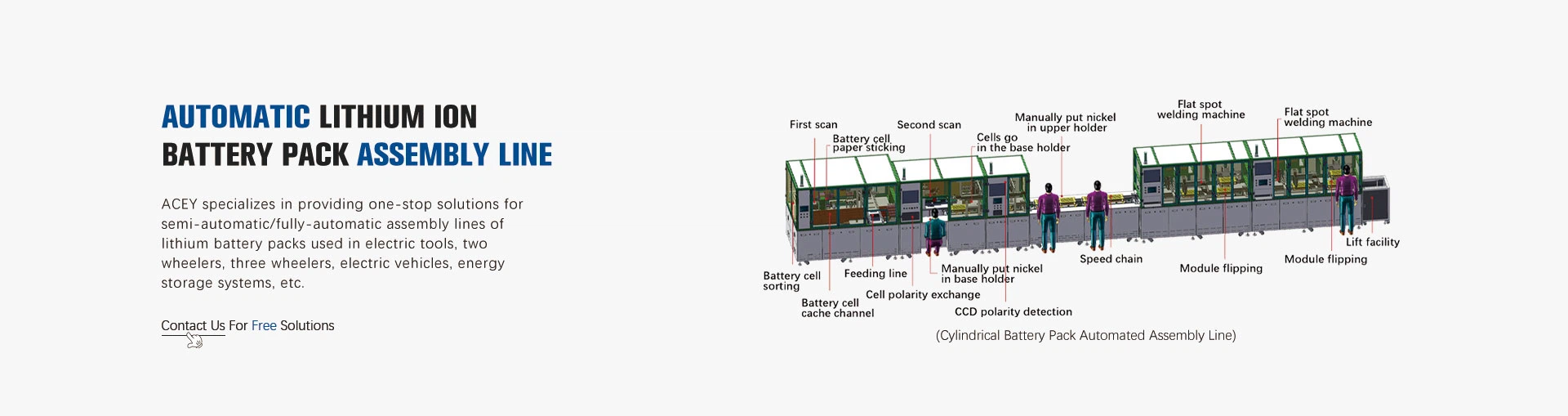
In actual manufacturing processes, "barley paper" (vulcanized fiber) is commonly used as an interlayer insulation gasket for the positive terminals of cylindrical cells. A precisely cut piece of barley paper must be applied to the positive end cap of each cylindrical cell to isolate the positive terminal from metal components such as the battery pack holder, nickel interconnects, and voltage sensing harnesses. This step is known in the industry as "positive terminal labeling" or "top insulation patching." Traditional manual application methods are not only inefficient but also prone to quality issues-such as misalignment, air bubbles, wrinkles, or missed applications-which severely compromise the consistency and safety of the battery pack.
To address this challenge, Acey New Energy offers a fully Battery Pasting Machine designed specifically for cylindrical battery assembly lines. The equipment automatically adjusts cutting dimensions based on the battery model and applies the barley paper to the designated positive terminal position of each cell with high speed and precision. It also integrates a visual inspection system to verify application quality in real-time, ensuring every cell meets rigorous manufacturing standards. Compatible with mainstream cylindrical formats such as 18650, 21700, 26650, and 32700, a single unit can process tens of thousands of cells daily; this drastically reduces labor costs and minimizes defect rates, providing a solid foundation for large-scale, intelligent battery pack production.

From a broader perspective, the application of this barley paper represents more than just a material substitution or process improvement; it reflects the modern manufacturing sector's relentless pursuit of "safety redundancy" and "lean production." As the energy density and charge/discharge rates of lithium-ion batteries continue to rise, the failure of even a single layer of insulation could lead to catastrophic consequences. Thanks to its unique fluoroplastic green glaze formulation, this barley paper demonstrates durability far exceeding industry standards in rigorous validation tests, including high-temperature aging, thermal shock cycling, and salt spray corrosion testing. It does not burn, melt, or become brittle, retaining its structural integrity and electrical insulation properties even at high temperatures of 250°C; for battery packs susceptible to localized overheating-such as that caused by welding spatter or poor contact at connection points-this thermal stability acts as a robust "firewall."
Beyond safety, Highland Barley Paper also exerts an indirect yet significant influence on the energy efficiency of battery packs. Thanks to its smooth surface and low coefficient of friction, the material resists sticking or electrostatic adhesion during the pickup and pressing stages of automated labeling machines, thereby ensuring smooth application and consistent positioning. A tighter, flatter insulation layer minimizes micro-frictional movement between the battery cells and the casing, reducing mechanical energy loss; it also facilitates the battery pack's overall thermal management design by preventing heat conduction paths from being obstructed by excessively thick or lifted insulation.
