

Hey there! As a supplier of battery cell testers, I've gotten tons of questions about what makes these nifty machines tick. So, I thought I'd take a deep dive into the power source for a battery cell tester.
First off, let's understand what a battery cell tester does. In a nutshell, it's a device that helps us evaluate the performance, capacity, and overall health of battery cells. Whether you're in the business of manufacturing batteries or just testing them for quality control, a battery cell tester is an essential tool.
Now, let's talk about the power sources. There are a few different types that can be used, and each has its own pros and cons.
1. AC Power Supply
Most battery cell testers, especially the larger, more industrial - grade ones, rely on an AC (alternating current) power supply. It's the same type of power that you get from the electrical outlets in your home or office.
The biggest advantage of using an AC power supply is its availability. It's everywhere! You can easily plug your battery cell tester into a standard wall socket, which makes it super convenient for both small - scale and large - scale operations.
Another plus is the stability. AC power supplies can provide a consistent voltage and frequency, which is crucial for accurate testing. When you're trying to measure the exact capacity or performance of a battery cell, even a small fluctuation in power can throw off your results.
However, there are some downsides too. AC power supplies can be bulky and heavy, especially if they need to handle high - power testers. Also, in some cases, you might need to deal with power conversion issues. For example, if your tester is designed to work with a specific voltage that's different from the standard outlet voltage, you'll need to use a transformer.
For instance, our 6V 300A Lithium Ion Battery Cycler Tester is a high - power device that requires a stable AC power supply. It's designed to handle large - scale battery testing, and the AC power ensures that it can operate smoothly and accurately.
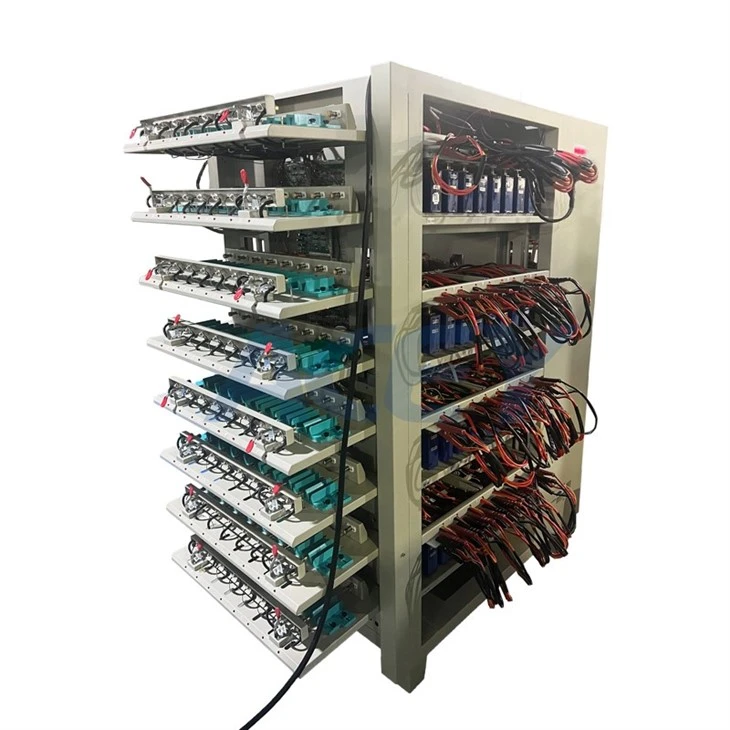

2. DC Power Supply
DC (direct current) power supplies are also used in some battery cell testers, especially those that are more portable or designed for specific types of batteries.
DC power is great because it's more similar to the power that batteries themselves produce. This means that it can sometimes provide a more accurate simulation of real - world battery usage.
Portability is another big advantage. You can use DC power sources like batteries or solar panels to power your tester. This is especially useful if you're working in a location where AC power is not available, such as a remote field site.
But there are challenges with DC power supplies as well. They usually have a limited capacity. If you're testing high - power battery cells, a DC power supply might not be able to provide enough energy for an extended period of testing. Also, maintaining a stable DC voltage can be tricky, as it can be affected by factors like the state of charge of the power source battery.
Our 5V 60A Cylindrical Prismatic Polymer Battery Cell Testing Machine can be powered by a DC power supply in some configurations. It's a versatile machine that can be used in different settings, and the option of DC power makes it more flexible for on - the - go testing.
3. Hybrid Power Systems
In recent years, we've seen the rise of hybrid power systems in battery cell testers. These systems combine the best of both worlds by using both AC and DC power sources.
A hybrid power system can switch between AC and DC power depending on the situation. For example, when AC power is available, the tester can use it to power up and perform the majority of the testing. But if the AC power goes out or if you need to move the tester to a different location, the system can automatically switch to DC power.
This kind of flexibility is a game - changer. It allows for continuous testing without interruptions, and it also makes the tester more adaptable to different environments.
Our Lithium Ion Battery Testing Equipment features a hybrid power system. It can be plugged into an AC outlet in a lab setting, but it also has the option to run on DC power from a battery pack, which is great for mobile testing applications.
Considerations When Choosing a Power Source
When you're in the market for a battery cell tester, choosing the right power source is crucial. Here are some things to keep in mind:
- Testing Requirements: If you're doing high - power, long - duration testing, an AC power supply might be your best bet. But if you need portability and flexibility, a DC or hybrid power system could be more suitable.
- Location: Where you'll be using the tester matters. If you're primarily working in a fixed location with easy access to AC power, that's a convenient option. But for fieldwork or remote locations, DC or hybrid power is a must.
- Budget: Different power sources come with different price tags. AC power supplies are usually more cost - effective in the long run, but DC power sources and hybrid systems might have a higher upfront cost but offer more benefits in terms of functionality.
In Conclusion
The power source for a battery cell tester can vary widely, and each type has its own strengths and weaknesses. Whether you're using an AC power supply for stability, a DC power supply for portability, or a hybrid system for flexibility, understanding the role of the power source is key to getting accurate and reliable battery testing results.
If you're in the market for a battery cell tester or have any questions about the power sources, don't hesitate to reach out for a chat and explore procurement options. We're here to help you find the right solution for your specific needs.
References
- Battery Testing Handbook - A comprehensive guide on battery testing techniques and equipment
- Journal of Power Sources - Research articles on the latest developments in battery technology and testing